
.png?width=14&height=14&name=Icon%20(1).png)


.png?width=24&name=Group%20(3).png)



%201.svg)



.svg)


.svg)


























How Can We Help Your Business?
Select a service below and our experts will
reach out to you within 24 Hrs.
 No commitment
 30 minutes
 100% free
Introduction
Every startup begins with a handful of leads, customer conversations, and sales opportunities. While it's easy to manage these in the early days through spreadsheets, email threads, or even memory, as your business grows, customer interactions become harder to track.
That's why choosing the right CRM for your startup is one of the best investments that you can make for the growth of your business. Modern CRM software are more than just a contact database, they help startups to organize their sales pipelines, automate repetitive tasks, understand customer behaviour, and generate the reporting that their investors expect.
In this MarkeStac guide, we'll compare the best CRM and AI tools for startups. We’ll break down their real costs, explain which platform suits which startup model, and why implementing a CRM early is far less expensive than waiting for your business to outgrow spreadsheets.
Why a CRM for Startups Matters in the Early Stage
In the first 12-24 months, a startup's most valuable asset isn't its product, it's the record of conversation with every prospect, user, and investor. But this record is often scattered across their founders' inboxes, WhatsApp threads, and spreadsheets unless a CRM captures it.
A CRM in the early stage of a startup does three things that no spreadsheet can:
- It creates a single source of truth as every lead, deal, and customer interaction lives in one place, visible to the whole team.
- It builds a compounding data asset as every month of CRM usage adds data that you can segment, re-engage, and analyze later. Startups that’ve had the CRM in the first month will have a significant head start on someone who got it at month 12.
- It makes you ready for investors. As funded startups are expected to report their pipeline, conversion rates, CAC, and revenue forecasts, a CRM helps produce these numbers in minutes.
CRM Software for Startups: What It Actually Costs (2026 Pricing)
The total CRM costs come in two layers: the cost of your annual license and the ongoing operations cost for the CRM. The second one includes the platform setup, its administration, maintaining data hygiene, and performing integrations.
As most founders budget only for the license cost, they often get surprised when they cover the ongoing CRM expenses. Let's break down how much the license and the ongoing CRM operations will cost you.
Annual License Costs (billed annually, per user/month)
.png?width=732&height=560&name=Annual-License-Costs-(billed-annually%2c-per-usermonth).png)
Let’s take a look at what a realistic annual budget would be for a 5-person startup team:
- Bootstrap: $0-$900/year (HubSpot Free or Zoho Standard)
- Seed-funded: $1,200-$3,500/year (Zoho Professional, Pipedrive Growth, or HubSpot Starter)
- Series A: $5,000-$15,000+/year (HubSpot Professional or Zoho Enterprise, with automation and reporting)
If you're considering HubSpot, check out our guide on building a $50K sales pipeline with HubSpot costs under $500/month to see how early-stage startups can maximize value without overspending.
Ongoing CRM Operations Cost (the hidden layer)
.png?width=755&height=384&name=Ongoing-CRM-Operations-Cost-(the-hidden-layer).png)
Here’s a general rule of thumb for budgeting your CRM costs. You should budget your total CRM cost for the first year at 1.5-2× the license price. You can also check our HubSpot implementation cost guide for a detailed breakdown about HubSpot implementation.
If you’re unsure about seeking professional help, a CRM partner like MarkeStac typically pays for itself by reducing your implementation timeline from months to weeks and preventing rebuilding at month 18 like most startups.
Best CRM Tools for B2B, D2C, and Service Startups: Match Your Type
.png?width=711&height=419&name=Best-CRM-Tools-for-B2B%2c-D2C%2c-and-Service-Startups-Match-Your-Type%20(1).png)

How Funded Startups Take Advantage of CRM
A CRM is meant to support you as your funding changes. During the pre-funding phase, it organizes your conversations, and post-funding, it becomes the operating system of your growth.
CRM supports funded startups through their:
- Board and investor reporting
You can pull pipeline coverage, win rates, sales velocity, and forecast accuracy directly from CRM dashboards instead of manually assembled decks.
- Scaling the sales team
With documented CRM processes, a new sales rep is productive in just one week instead of taking months. Playbooks, sequences, and lead routing live in the system and not in the founder's head.
- CAC and channel attribution
As the CRM connects everything from your ad spend, forms, and deals, you know exactly which channel produces revenue. This data also helps to build your growth plan for the next funding round.
- Automation as headcount leverage
Lead scoring, follow-up sequences, and lifecycle automation let a 3-person revenue team perform like a team of 8.
- Due-diligence readiness
Clean CRM data (pipeline history, churn, expansion revenue) accelerates future fundraising, and Mergers and Acquisitions (M&A) conversations.
Many CRMs also offer a special discounted price like HubSpot startup discount offers up to 90% off for startups, other programs include Salesforce launchpad for startups, Zoho for Startups, and Pipedrive’s up to 50% off for startups.
Where CRM Is Used Most in Your Business
Modern CRMs have evolved from being a mere contact database to a comprehensive system that connects your revenue operations in a single platform. For a typical startup, the highest-usage areas of a CRM include:
- Sales pipeline management - tracking every deal from lead to close, with stage-by-stage visibility.
- Lead capture and routing - website forms, ads, and chat flowing straight into the CRM with automatic assignment.
- Email and follow-up automation - email sequences that keep prospects warm without manual effort.
- Customer support and success - tickets, renewals, and health scores attached to the same contact record sales used.
- Marketing segmentation and campaigns - sending the right message to the right list based on their behavior and lifecycle stage.
- Reporting and forecasting - dashboards for founders, revenue leaders, and investors.
Drawbacks of Skipping CRM in the Early Phase
Now that you know how a CRM supports your overall business operations, let’s discover what happens if you skip CRM implementation in the early phase of your startup journey.
- You lose leads, silently - Without a system in place, almost 20-40% of your inbound leads never get a second follow-up and you never even see the revenue that you’ve lost.
- No data history - When you finally adopt a CRM, say at month 18, you start with an empty database. Every conversation before that is unrecoverable.
- Founder dependency - As all your customer knowledge lives in one inbox so hiring a salesperson means starting from zero.
- Migration is expensive- Moving from spreadsheets and scattered inboxes into a CRM later costs far more (in time, cleanup, and lost context) than starting in one.
- Investor friction - When an investor asks you to report your pipeline, conversion rates, CAC, and revenue forecasts in a fundraiser. A CRM produces these numbers in minutes while spreadsheets question your credibility.
- No compounding - Marketing automation, lead scoring, and re-engagement campaigns all require historical data. If you skip the CRM, the growth tools you deploy in your second year will have nothing to run on.
The 1-Year Benefit: What CRM Data Does for Your Startup After 12 Months
Just getting the CRM subscription will get you nowhere if your team doesn't use it. After a year of disciplined CRM usage, your existing data will start fueling your growth.
Consistent CRM use over a year supports your startup business through:
- Re-engagement revenue - Every closed-lost deal and cold lead from the past year is a segmented list that you can win back. This builds the cheapest pipeline that you'll ever generate.
- Conversion benchmarks - As you know your real lead-to-demo, demo-to-close, and average deal cycle, this data helps to plan next year's targets. With data-driven insights, these goals are not guesses but forecasts.
- Channel truth - Twelve months of source data reveals which channels produce customers and not just leads, so your marketing budget shifts to what actually works.
- Proven Ideal Customer Profile - CRM reports reveal exactly which industries, company sizes, and personas close the fastest and churn the least. This creates a proven ICP for you, sharpening your positioning and outbound targeting.
- Sales process optimization - Stage-level reports show exactly where your deals stall, so you fix the leak instead of pouring more leads into a broken funnel.
- Customer expansion - Purchase history and engagement data surface opportunities for upsell and renewal automatically.
In short, your 1st year’s data pays for year two's growth, compounding CRM benefits over time.
Budget-Friendly Productivity & Operations Tools for Startups
A growing startup doesn’t just need a CRM but a complete tech stack to support its operations. We have compiled a list of tools that you might need for your business operations, every tool in this list is priced for startup budgets.
Team, Operations & HR Management
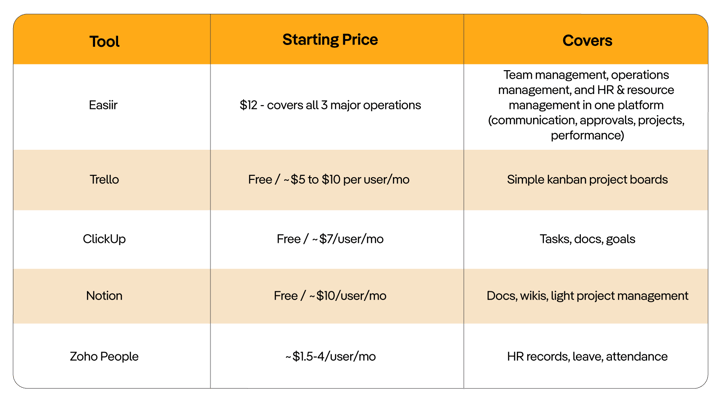
Why Easiir Stands Out for Startups
When it comes to supporting overall business operations, most startups end up paying for three separate tools - one for team communication, one for project/operations management, and one for HR and approvals.
Easiir consolidates all these major operations into a single platform. What makes it even better is that its pricing starts at $12, which replaces the $30-60/month that you’d have to spend on stacked subscriptions and eliminates the tool-switching tax on a small team.
Calling & Communication
Payments
Lead Generation
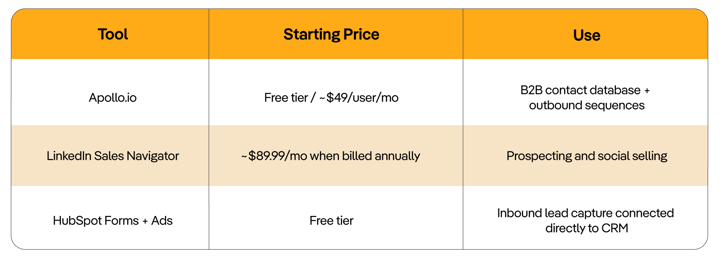
A complete startup revenue stack would consist of the CRM (Zoho/HubSpot free tier) + Easiir ($12) + FreJun + Razorpay. This allows small teams to run under $100/month with every tool feeding meaningful data back into the CRM for further optimization and scaling benefits.
How MarkeStac Lifts Startups from Setup to Scale
Choosing the tools is step one, making them work together and your teams to actually use them is where most startups stall. That's the gap MarkeStac closes with providing the best CRM consultants.
MarkeStac is a certified CRM consulting firm and official partner of HubSpot, Saleforce, Zoho Easiir, Razorpay, FreJun, HubSpot, Zoho, and ActiveCampaign, which means startups get a single team that can:
- Recommend platform-agnostically
We implement HubSpot, Zoho, ActiveCampaign, and many more tools so our recommendation fits your stage and budget and not a vendor quota.
- Implement in weeks, not months
We have supported 400+ global clients across the US, UK, India, APAC, and the Middle East, with proven playbooks for CRM setup, migration, and automation.
- Build the full stack
We handle your entire tech stack consisting of the CRM, Easiir for operations, FreJun for calling, and Razorpay for payments. This integrated stack ensures all your data flows into a single reporting layer.
- Stay affordable
India-based delivery with global standards means you get startup-friendly pricing on implementation, ongoing CRM operations, and managed marketing (SEO/AEO, paid media, email marketing.
- Grow with you
You can start with a free CRM tier today and when you land Series A, our team will migrate and scale you without any rebuild or data loss.
The bottom line for founders: a CRM started today is worth more than any tool you buy later. Start lean, start now, and let the data compound.
Frequently Asked Questions
Got questions? We’ve got answers. Explore the most common queries about Markestac's automation platform and learn how it can streamline your processes, connect your tools, and drive growth.
What is the best CRM for startups?


For most early-stage startups, HubSpot’s free tier or Starter tier is the best all-round CRM. You can also explore other options like the Zoho CRM for the best budget all-in-one, and Pipedrive as it’s the best pure sales CRM for startups. The right pick for you depends on your sales motion, see the startup-type table above.
What is the best free CRM for startups?
HubSpot's free CRM is the most generous of all with its unlimited contacts and core sales features at $0. Zoho CRM and Freshsales also offer free plans for up to 3 users and are ideal for founder-led sales.
What is the best sales CRM for startups?
Pipedrive offers a visual pipeline and faster adoption for a small outbound team. But if you need marketing automation alongside sales, HubSpot Sales Hub is a better long-term option.
How much does a CRM for startups cost?
A CRM for a startup can cost anywhere from $0 with HubSpot and Zoho CRM’s free plan to about $15,000/year for a funded team on a Professional tier. A 5-person seed-stage team, ends up paying $1,200-$3,500/year for licenses, plus setup and admin time.
What are the top CRM options for startups in 2026?
HubSpot, Zoho CRM, Pipedrive, ActiveCampaign, and Freshsales cover 90% of startup use cases. Salesforce becomes relevant at later stages when dedicated RevOps resources are required.
Why do startups need a CRM?
As a startup grows, the customer data compounds over time. A CRM helps to capture every lead and conversation from day one, preventing lost follow-ups, making hiring faster, and producing the pipeline and conversion reports that investors expect.
When should a startup get a CRM?
A startup should get a CRM before its first 50 leads and ideally from the first customer conversation itself. This doesn’t mean that you should go big, starting on a free tier costs nothing but starting late will definitely cost you over 12 months of unrecoverable data.
Which CRM tools for startups integrate with calling and payments?
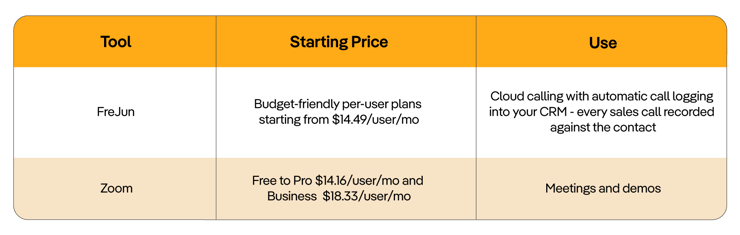
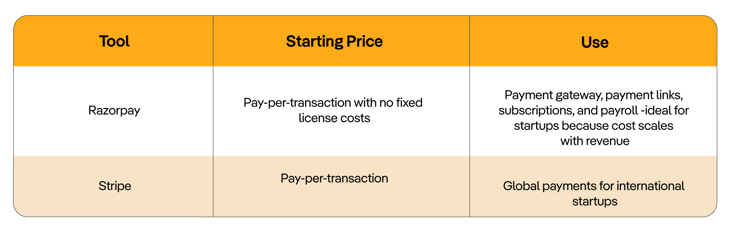
The HubSpot CRM and Zoho CRM both integrate with FreJun (for cloud calling with auto call-logging) and Razorpay (for payments and subscriptions). So, the full revenue stack reports into one dashboard.
Which CRM system for startups scales best after funding?
HubSpot and Zoho Enterprise scale cleanly from free tier to Series A+ without a migration. A partner like MarkeStac handles this upgrade so that no data or history is lost.
.jpg)





.png?width=80&height=81&name=mail-01%20(1).png)


.svg)




.png?width=410&height=126&name=Group%201000005667%20(1).png)